





PE 22-28 13MG FOR SALE
Description
PE 22-28 13mg is a high-quality research peptide fragment that has gained attention in advanced peptide science for its potential role in cellular protection, membrane stability research, and metabolic signaling studies. As a shortened synthetic fragment derived from the larger peptide framework known as Activity-Dependent Neuroprotective Protein (ADNP), PE 22-28 is widely investigated in laboratory settings for its structural stability and biological activity in experimental models.
Research interest in PE 22-28 continues to grow due to its simplified structure, which allows scientists to study specific functional regions of the parent protein without the complexity of the full sequence. This makes it a valuable tool in peptide research focused on understanding neurobiological pathways, cellular resilience, and intracellular communication. Its compact design provides researchers with a controlled and targeted way to examine peptide-protein interactions at a molecular level.
One of the primary areas of investigation involving PE 22-28 13mg is its potential involvement in cellular protection mechanisms. In laboratory studies, peptides derived from ADNP fragments are explored for their ability to interact with cellular structures associated with stability and maintenance. Researchers use PE 22-28 to better understand how peptide fragments may contribute to preserving cellular integrity under stress conditions in controlled experimental environments.
PE 22-28 is also studied for its relevance to neurobiological research. Because it originates from a protein associated with brain development and neuronal function, this peptide fragment is frequently included in studies examining neural signaling pathways, synaptic activity, and neuroprotective mechanisms. Its role in research helps scientists explore how small peptide sequences may influence broader biological processes related to brain cell communication and maintenance.
Another important focus of PE 22-28 research is its potential relationship with mitochondrial and metabolic signaling pathways. Cellular energy regulation is a key area of modern peptide science, and researchers continue to investigate how peptide fragments may interact with systems responsible for energy balance and intracellular function. PE 22-28 provides a useful model for studying these processes in simplified experimental frameworks.
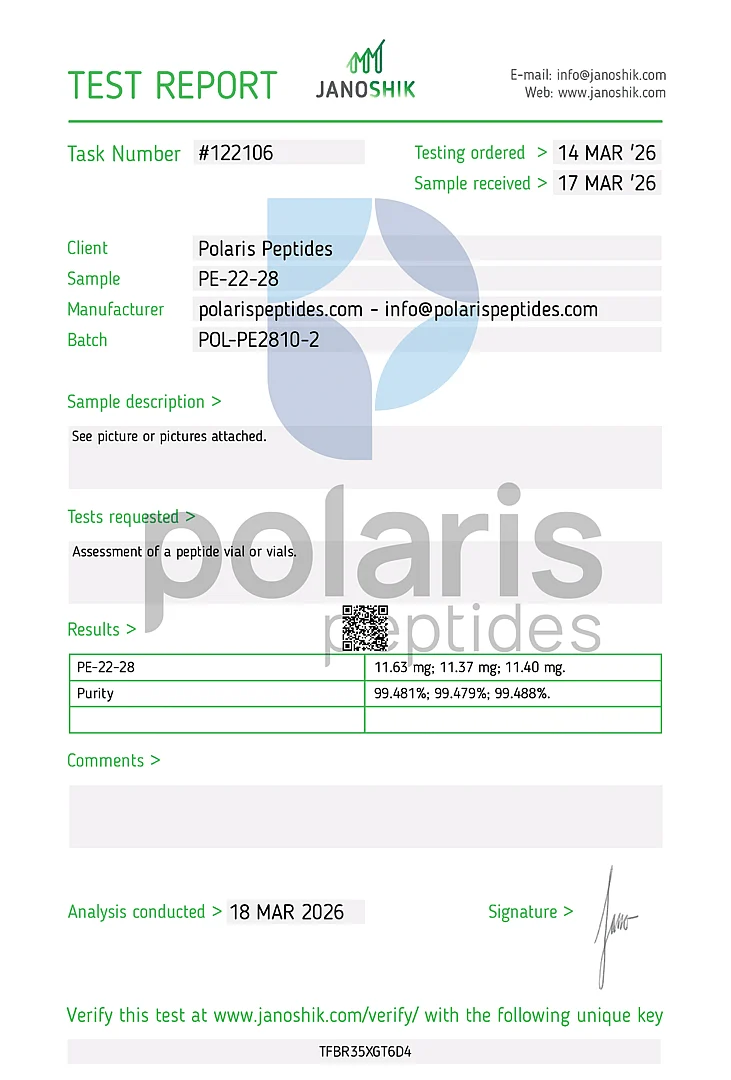
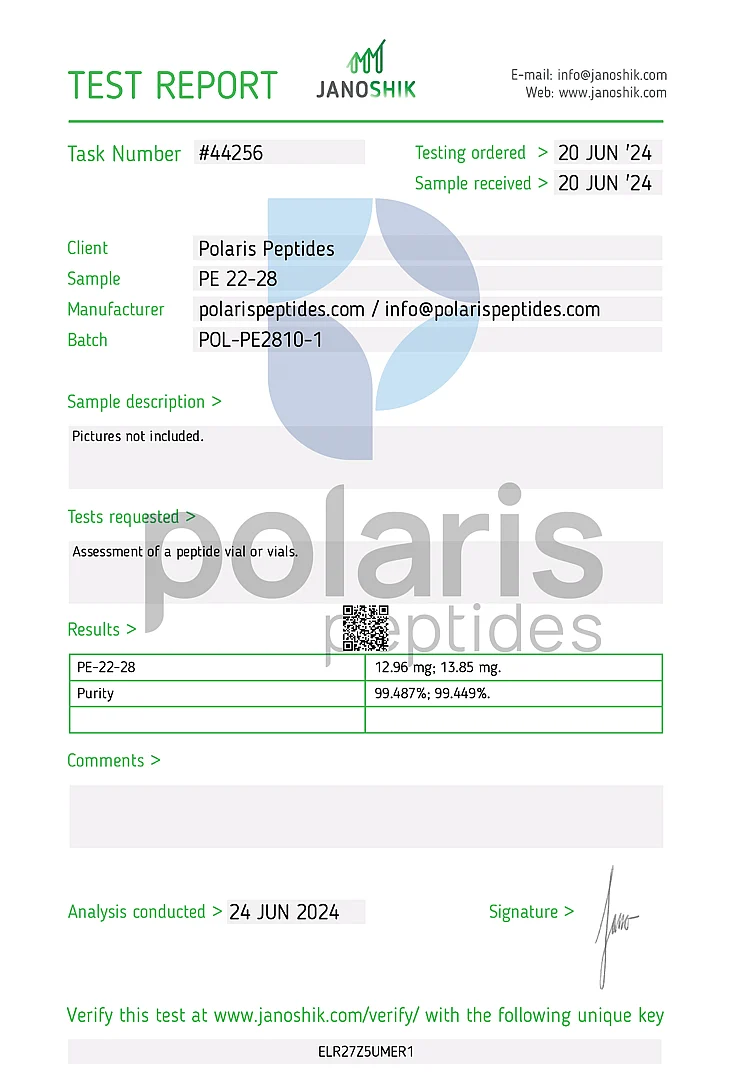
The 13mg concentration of PE 22-28 is designed to support a variety of research applications, offering flexibility for repeated studies and comparative analysis. High purity and consistency are essential in peptide research, and this product is manufactured under strict quality-control standards to ensure reliable performance in laboratory environments. Each vial contains a precise 13mg quantity suitable for controlled experimental use.
PE 22-28 is often utilized in preclinical research settings focused on peptide signaling, protein interaction mapping, and structural biology. Its fragment-based nature allows researchers to isolate specific functional domains of the ADNP protein, making it especially valuable for studies aiming to understand how smaller peptide sequences contribute to larger biological systems. This approach helps advance scientific understanding of peptide functionality and molecular communication.
As interest in neuropeptides and protein-derived fragments continues to expand, PE 22-28 remains an important compound in experimental research pipelines. Its relevance to cellular signaling, structural biology, and neurobiological pathways has positioned it as a valuable research tool in modern peptide science. Ongoing investigations continue to explore its properties and potential applications within controlled laboratory settings.
For researchers seeking a high-quality peptide fragment for advanced scientific studies, PE 22-28 13mg offers a reliable and well-characterized option. Its strong research relevance, structural simplicity, and role in ongoing peptide investigations make it a useful addition to experimental programs focused on cellular biology and neuropeptide research.
Be the first to review “PE 22-28 13mg”
Related products

Other Peptides

Other Peptides


Other Peptides

Other Peptides

Other Peptides

Other Peptides

Other Peptides

Other Peptides
Reviews
There are no reviews yet.